The Complete Guide to the 5 Levels of Hoarding
Understanding the 5 levels of hoarding from mild clutter to severe biohazard. Learn how each level is classified, what to expect, and when professional help is needed.
Need cleanup help?
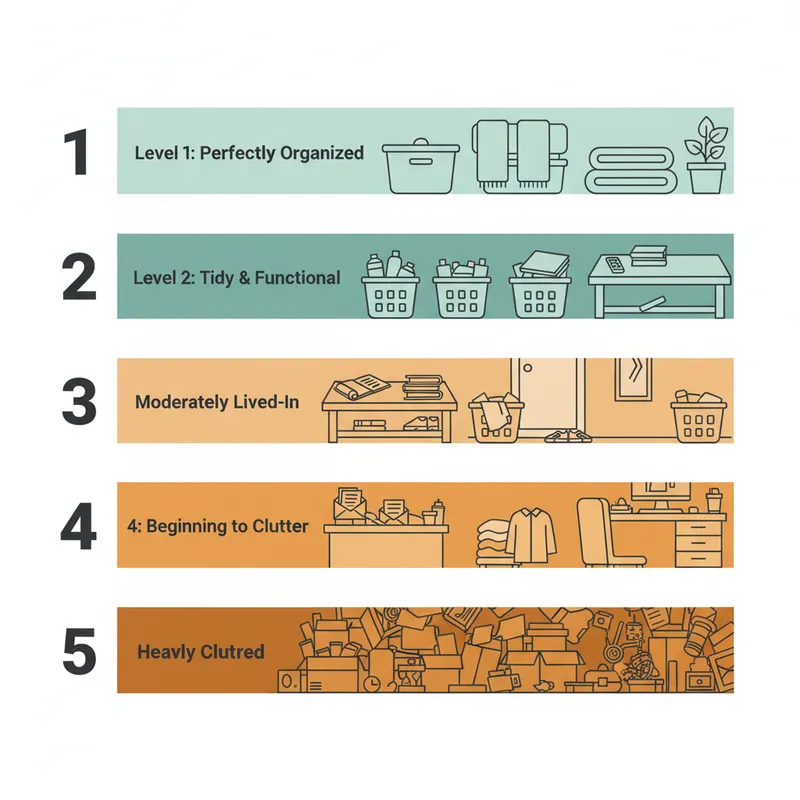
Hoarding disorder affects approximately 2.5% of adults — around 290,000 people in Ohio alone. Professionals use a standardized scale to classify hoarding severity into five distinct levels, each requiring different approaches to cleanup and recovery. Understanding where a situation falls on this scale is the first step toward getting the right help.
This guide covers the ICD Clutter-Hoarding Scale, developed by the Institute for Challenging Disorganization, which is the most widely used assessment tool among hoarding cleanup professionals, social workers, and mental health providers.
Level 1: Light Clutter (Green)
Level 1 represents the mildest form of hoarding. At this stage, the home is generally livable and may not appear significantly different from a typical busy household.
Characteristics
- All doors, stairways, and windows are accessible
- All rooms are being used for their intended purpose
- Light clutter that does not impede movement
- No noticeable odors beyond normal household smells
- All utilities (water, electricity, HVAC) are fully functional
- No evidence of pests or vermin
- Normal housekeeping with some areas of accumulation
Health Risks
Minimal health risks at this level. The primary concern is the potential for escalation if acquiring behaviors are not addressed.
Cleanup Requirements
- PPE: Standard cleaning supplies (no special equipment)
- Timeline: 1-2 days
- Cost estimate: $1,000 - $2,500
- Professional help needed? Usually not — a professional organizer or motivated family effort is often sufficient

Level 2: Moderate Clutter (Yellow)
Level 2 marks the point where hoarding begins to significantly impact daily living. Visitors may notice something is wrong, and the homeowner often starts to feel embarrassed about the condition of their home.
Characteristics
- At least one room cannot be used for its intended purpose
- One or more exits may be partially blocked
- Light but noticeable odors
- Some evidence of housekeeping neglect (unwashed dishes, dusty surfaces)
- Minor pest evidence (occasional mouse droppings, a few insects)
- Clutter beginning to overflow from designated storage areas
- Narrow pathways forming between piles of items
Health Risks
Moderate risks including trip and fall hazards, potential fire hazards from blocked exits, and early pest-related concerns. Blocked exits are a serious safety issue.
Cleanup Requirements
- PPE: Gloves and basic face mask recommended
- Timeline: 2-3 days
- Cost estimate: $2,500 - $5,000
- Professional help recommended? Yes — the emotional attachment to items makes self-cleanup difficult at this stage
Level 3: Significant Clutter (Orange)
Level 3 is where hoarding becomes clearly visible and often triggers intervention from family, landlords, or code enforcement. The home's condition begins to affect neighbors and the broader community.
Characteristics
- Multiple rooms are unusable for their intended purpose
- Clutter visible from outside the home (porch, yard, driveway)
- At least one major appliance is non-functional (stove, refrigerator, toilet)
- Noticeable odors detectable outside the home
- Active pest infestation (rodents, cockroaches, flies)
- Light structural damage from neglect or weight of items
- Bathroom or kitchen in poor sanitary condition
- Expired food present
Health Risks
Significant health risks including respiratory issues from dust and mold, bacterial exposure from unsanitary conditions, fire hazards, structural collapse risk, and pest-borne diseases.
Cleanup Requirements
- PPE: Full personal protective equipment (coveralls, gloves, N95 respirator, eye protection)
- Timeline: 3-5 days
- Cost estimate: $5,000 - $10,000
- Professional help strongly recommended — safety hazards and volume of items require trained teams
Level 4: Severe Hoarding (Red)
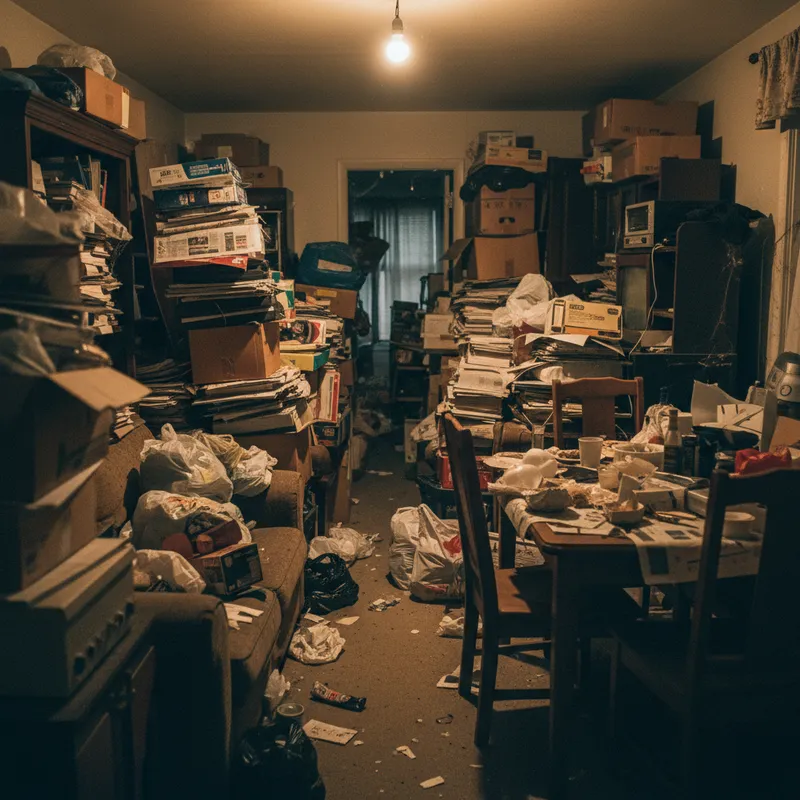
Level 4 represents a dangerous living environment where the home is barely habitable. At this stage, intervention from Adult Protective Services, code enforcement, or health departments is common. In Ohio, property condemnation proceedings may begin under ORC 3707.01.
Characteristics
- Structural damage to walls, floors, or ceilings from accumulated weight
- Sewage backup or non-functional plumbing
- Mold growth visible on walls, ceilings, or items
- Rotting food throughout the home
- Animal waste present (if pets are in the home)
- Excessive spider webs, bat droppings, or animal evidence
- Bedroom may be unusable — person sleeps in a chair or on a cleared spot
- Standing water present
- Strong, pervasive odors
Health Risks
Severe and immediate health risks including biohazard exposure, mold-related respiratory illness, structural collapse, fire (often no working smoke detectors), ammonia from animal waste, and potential for infectious disease.
Cleanup Requirements
- PPE: Full PPE with P100 respirator minimum, often Tyvek suits
- Timeline: 5-7 days
- Cost estimate: $10,000 - $15,000
- Professional cleanup required — biohazard protocols, OSHA compliance, potential mold remediation
Level 5: Extreme / Uninhabitable (Black)
Level 5 is the most severe classification. The home is completely uninhabitable and poses an imminent danger to the occupant, neighbors, and emergency responders. This level almost always involves emergency intervention and multi-agency coordination.
Characteristics
- Home is uninhabitable by any reasonable standard
- No running water or functional plumbing
- No working electricity
- No functional HVAC system
- Deceased animals present
- Human waste in containers or on floors
- Severe fire hazard — irreversible damage from hoarding
- Major structural damage — floors, walls, or roof compromised
- Person may be living in a vehicle, shed, or a small cleared area
- Hazardous materials may be present (chemicals, fuel, medical waste)
Health Risks
Extreme and life-threatening. Every type of hazard is present simultaneously: biological, chemical, structural, and fire. Emergency responders may be unable to safely enter. The property is typically condemned by health authorities.
Cleanup Requirements
- PPE: Hazmat-level protection, self-contained breathing apparatus in some cases
- Timeline: 7-14+ days (can extend to weeks)
- Cost estimate: $15,000 - $25,000+ (can exceed $50,000 with structural repairs)
- Professional cleanup mandatory — specialized biohazard teams, potentially multiple contractors (cleanup, mold, pest control, structural repair)

Summary Comparison Table
| Level | Severity | Timeline | Cost Range | PPE Required |
|---|---|---|---|---|
| Level 1 | Light (Green) | 1-2 days | $1,000 - $2,500 | Standard |
| Level 2 | Moderate (Yellow) | 2-3 days | $2,500 - $5,000 | Gloves + Mask |
| Level 3 | Significant (Orange) | 3-5 days | $5,000 - $10,000 | Full PPE |
| Level 4 | Severe (Red) | 5-7 days | $10,000 - $15,000 | Full PPE + Respirator |
| Level 5 | Extreme (Black) | 7-14+ days | $15,000 - $25,000+ | Hazmat Level |
When to Seek Professional Help
While Level 1 situations can often be managed with a motivated family effort and perhaps a professional organizer, Levels 2 and above benefit significantly from professional hoarding cleanup services. By Level 3, professional help is strongly recommended for safety reasons, and Levels 4-5 absolutely require trained, equipped teams.
Ohio has over 60 hoarding cleanup providers across the state. When choosing a provider, look for:
- Experience specifically with hoarding (not just general junk removal)
- IICRC certification (especially TCST for trauma/biohazard scenes)
- Compassionate, judgment-free approach
- Willingness to work with the homeowner on sorting decisions
- Clear pricing and timeline estimates
- Proper insurance and licensing
Getting Help in Ohio
If you or someone you know is dealing with hoarding at any level, help is available:
- Ohio Adult Protective Services: 1-855-644-6277
- Ohio Crisis Hotline (OhioMHAS): 800-720-9616
- Hoarding Connection of Cuyahoga County: 216-420-6700
- Take our free hoarding severity self-assessment
- Estimate your cleanup cost with our calculator
- Find cleanup providers in your area
Need Help Now?
Get a free, no-obligation estimate from trusted Ohio providers.
Ready to Get Help?
Get a free, no-obligation estimate from our network of trusted Ohio providers.